

Children's Cartoon Alarm Clock with Mute, Singing, and Night Light Functions - Creative Fashion Design, 6.5cm Thick ABS Shell, Available in Pink or Blue

Children's Cartoon Alarm Clock with Mute, Singing, and Night Light Functions - Creative Fashion Design, 6.5cm Thick ABS Shell, Available in Pink or Blue
Children's Cartoon Alarm Clock with Singing Alarm, Mute Function and Night Light

Designed with young users in mind, this children's alarm clock offers a friendly alternative to traditional, jarring alarms. Its core function is to make time-telling and morning routines more approachable through playful features. The clock provides multiple alarm modes, including a singing alarm for a melodic wake-up and a mute function for quiet operation when needed. The integrated night light adds a practical element for bedtime, casting a soft glow in a child's room. With a 6.5cm thick, cartoon-styled ABS shell, it has a tactile, toy-like presence that blends functionality with a fun aesthetic suited for a nursery or child's bedroom.
Features and Construction
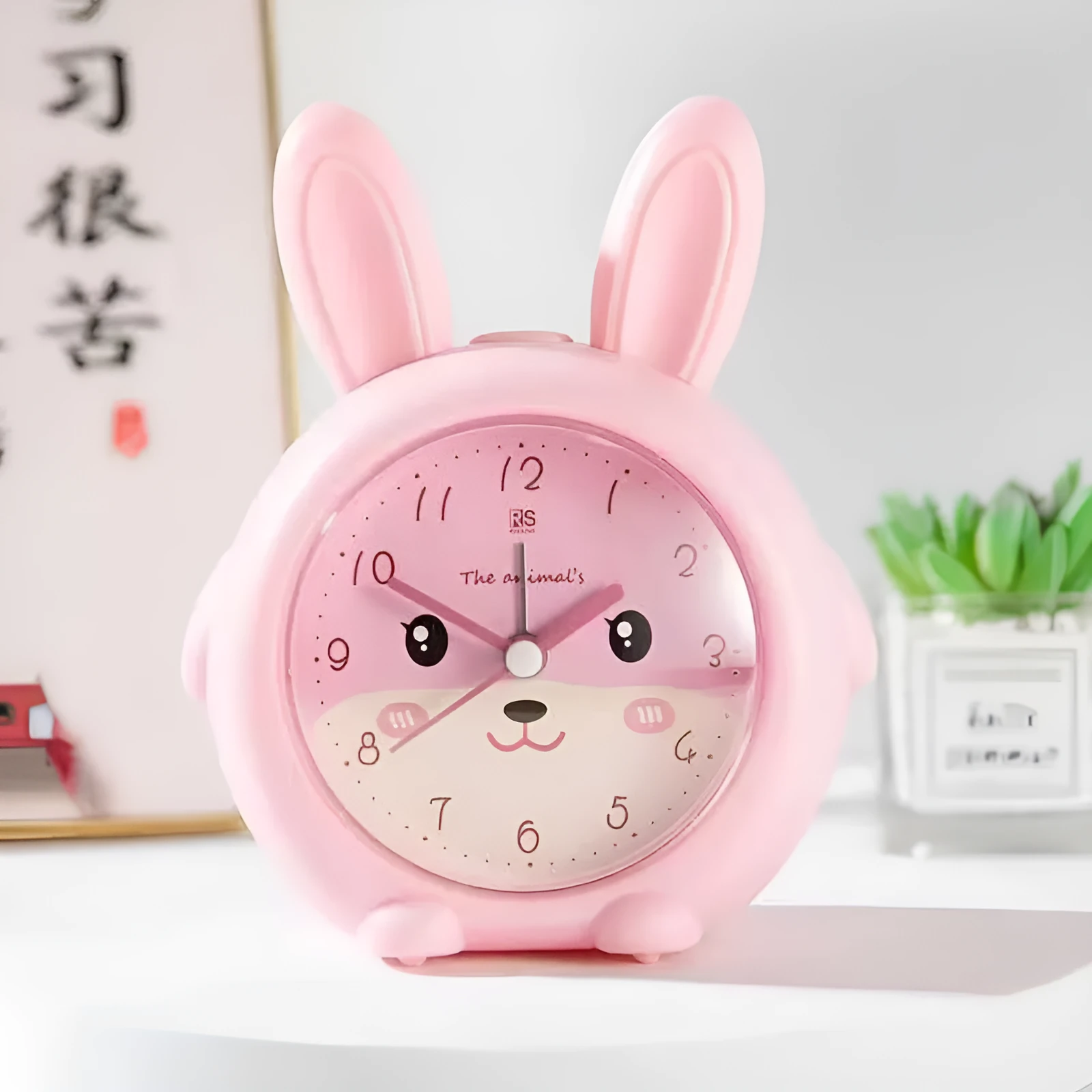
The clock's design centres around key features aimed at usability for children. Its construction is straightforward, prioritising a specific look and a set of clear, interactive functions.
Material and Build
The clock is housed in a single-piece shell made from ABS plastic. This material choice contributes to the product's overall cartoon style and provides a solid casing for the internal components. The design does not incorporate multiple materials or complex assemblies, resulting in a simple, unified build focused on the chunky 6.5cm profile that defines its visual character.
Size and Practical Fit
The primary provided dimension is a thickness of 6.5cm, which gives the clock a substantial, graspable form factor for a child's room. This chunky profile makes it a stable desktop or bedside item that is visually prominent. Its cartoon style and size make it suitable for placement on a child's nightstand, desk, or shelf where it can be easily seen and interacted with.
Uses and Placement
This clock serves dual purposes: as a functional timepiece and as a gentle tool for establishing routines. Its application is primarily domestic, fitting into the daily rhythm of a family home.
Event or Professional Use
While designed for home use, the clock's distinct features could be applied in specific child-focused settings. Its singing alarm and mute function might be useful in a nursery school or a childminder's setting to signal activity changes in a non-disruptive way. The night light function could also provide subtle illumination in a daycare nap room. Its primary professional value lies in its child-friendly operation rather than precision timekeeping.
Everyday Home Use
At home, the clock acts as a dedicated children's timepiece. Parents can use it to teach young children how to tell time and structure their day around set routines like wake-up, playtime, or bedtime. The singing alarm offers a pleasant alternative to a buzzer for morning wake-ups, while the mute function allows the clock to be used silently as a night light or room decoration. Its cartoon design helps it blend into a child's personal space.
Benefits and Buying Value
The value of this product comes from combining several child-centric features into a single, purpose-built item. It addresses specific parental needs for gentle routine tools.
Reuse and Low Maintenance
The simple ABS plastic construction suggests a product that requires minimal upkeep. Its one-piece shell is easy to wipe clean with a dry cloth. With basic care, the clock can be used consistently over time, transitioning with a child as they grow or even being passed to a younger sibling, provided the functions remain relevant to their age and needs.
Why Choose This Product
This clock is chosen for its specific feature set tailored to children. It replaces the need for a standard alarm clock plus a separate night light. The combination of a singing alarm, mute option, and integrated light, housed in a cartoon-style body, creates a specialised tool for parents seeking a friendly way to introduce time management. The choice between the pink variant with snooze and the blue variant with a nap mode allows for a slight preference in secondary functionality.