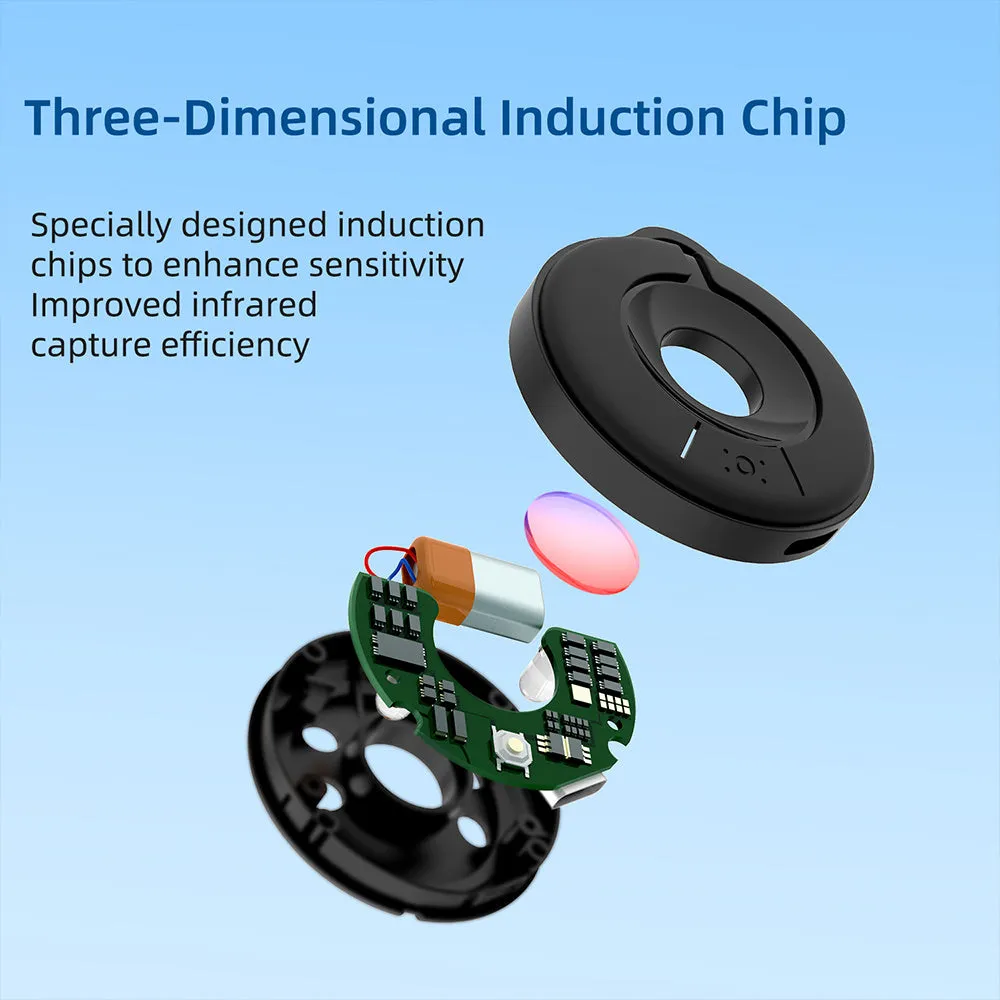
Camera detector with 5-metre infrared optical detection range for remote inspection of hidden cameras in dark environments, compact and easy to use security device for privacy protection


Camera detector with 5-metre infrared optical detection range for remote inspection of hidden cameras in dark environments, compact and easy to use security device for privacy protection
Infrared Camera Detector: 5-Metre Remote Detection for Hidden Cameras in Dark Conditions
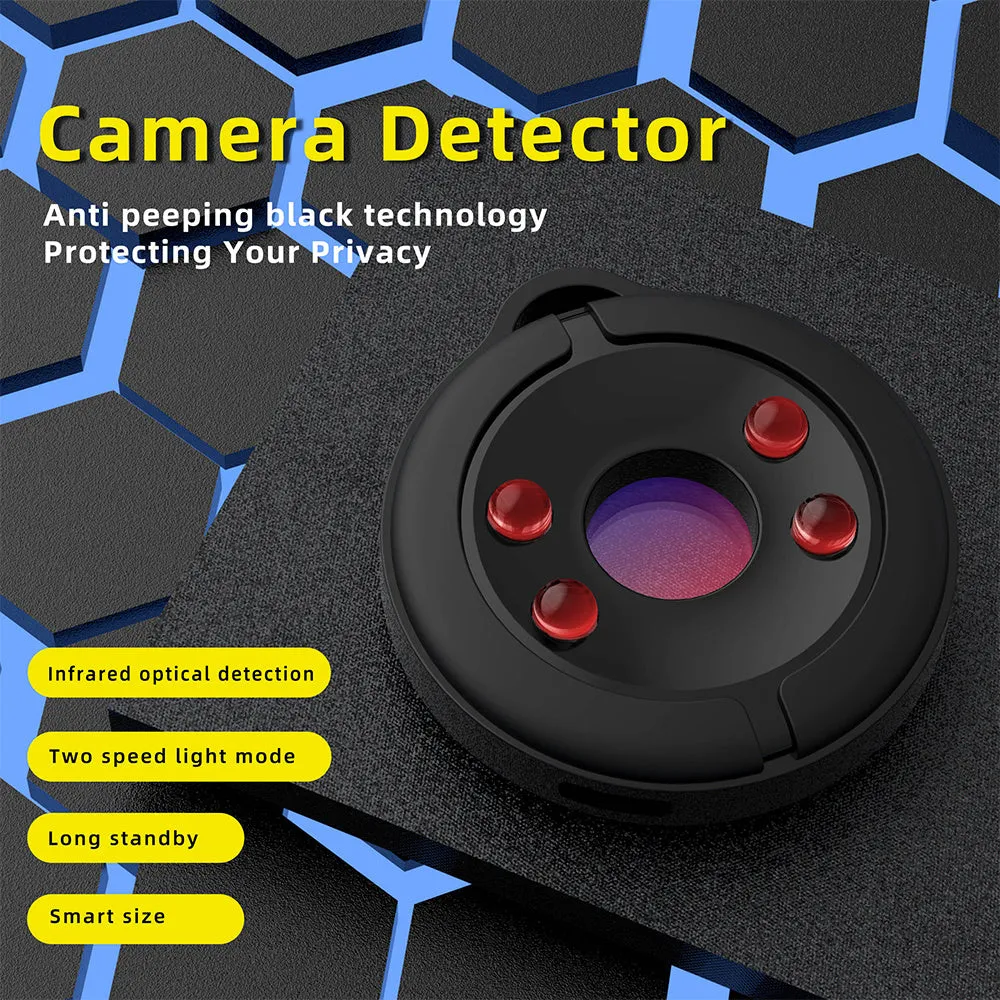
This camera detector is designed for individuals concerned about unauthorised surveillance and privacy breaches. It provides a practical method for inspecting rooms, vehicles, or personal spaces for hidden cameras without the need for specialist technical knowledge. The core function relies on infrared optical detection, which can identify the reflective lens of a camera, even when it is not actively recording or in pitch-black environments. This makes it a valuable tool for travel, home security checks, or professional sweeps where visual inspection alone is insufficient.
Features and Construction
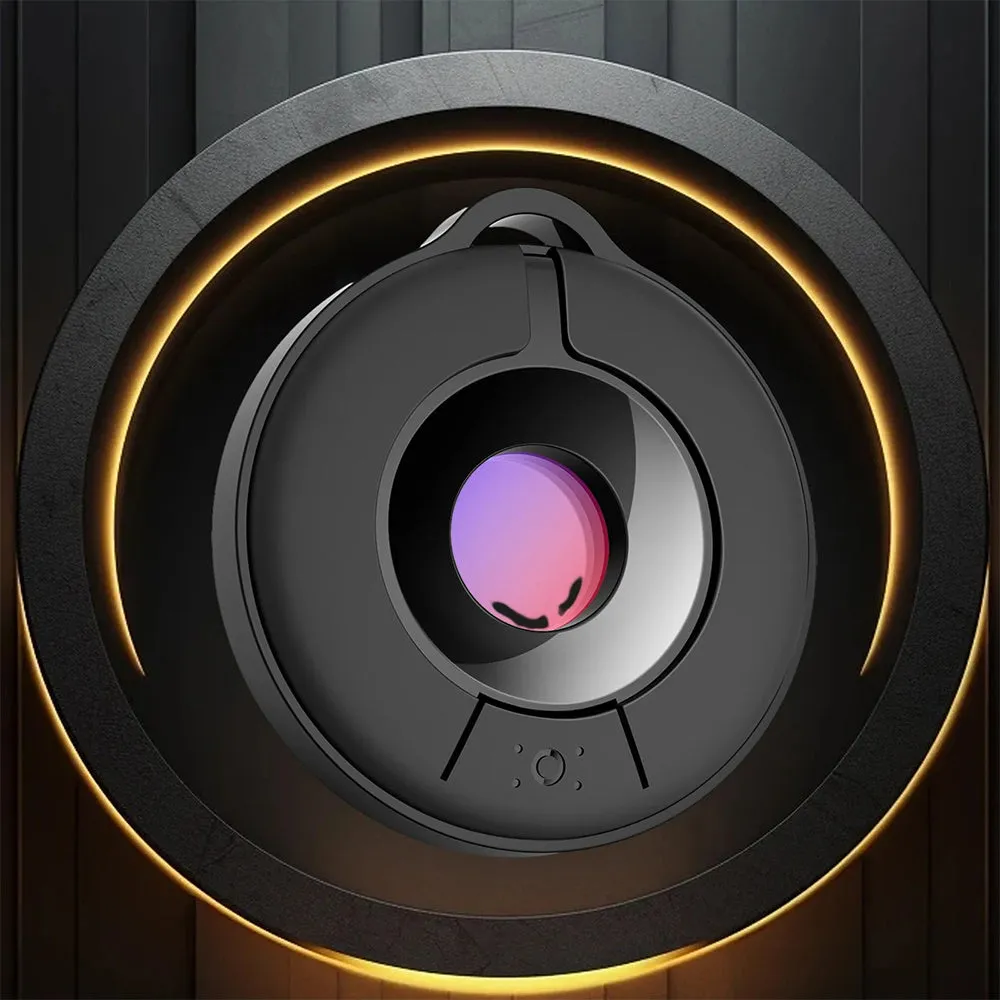
This section details the build and operational features of the camera detector, explaining how its design supports its primary function of locating hidden surveillance devices.
Material and Build
The detector is described as having a compact, sleek, and minimalist design. While specific materials are not listed, this suggests a lightweight casing that houses the infrared optical components and filtering lens. The design prioritises portability and discreet use, allowing it to be carried easily for on-the-go privacy checks. Its construction is centred around the infrared scanning technology rather than robust external materials, focusing its utility on its detection capability.
Size and Practical Fit
The source text emphasises the device's small size and lightweight nature, making it highly portable. This compact form factor means it can be stored in a bag, pocket, or briefcase without adding significant bulk. The practical fit is for handheld use during inspections, allowing the user to systematically scan an area. Its minimalist design also contributes to ease of use, avoiding complex interfaces that might hinder operation during a security check.
Uses and Placement

The detector's application spans both professional and personal scenarios where verifying the absence of covert cameras is necessary.
Event or Professional Use
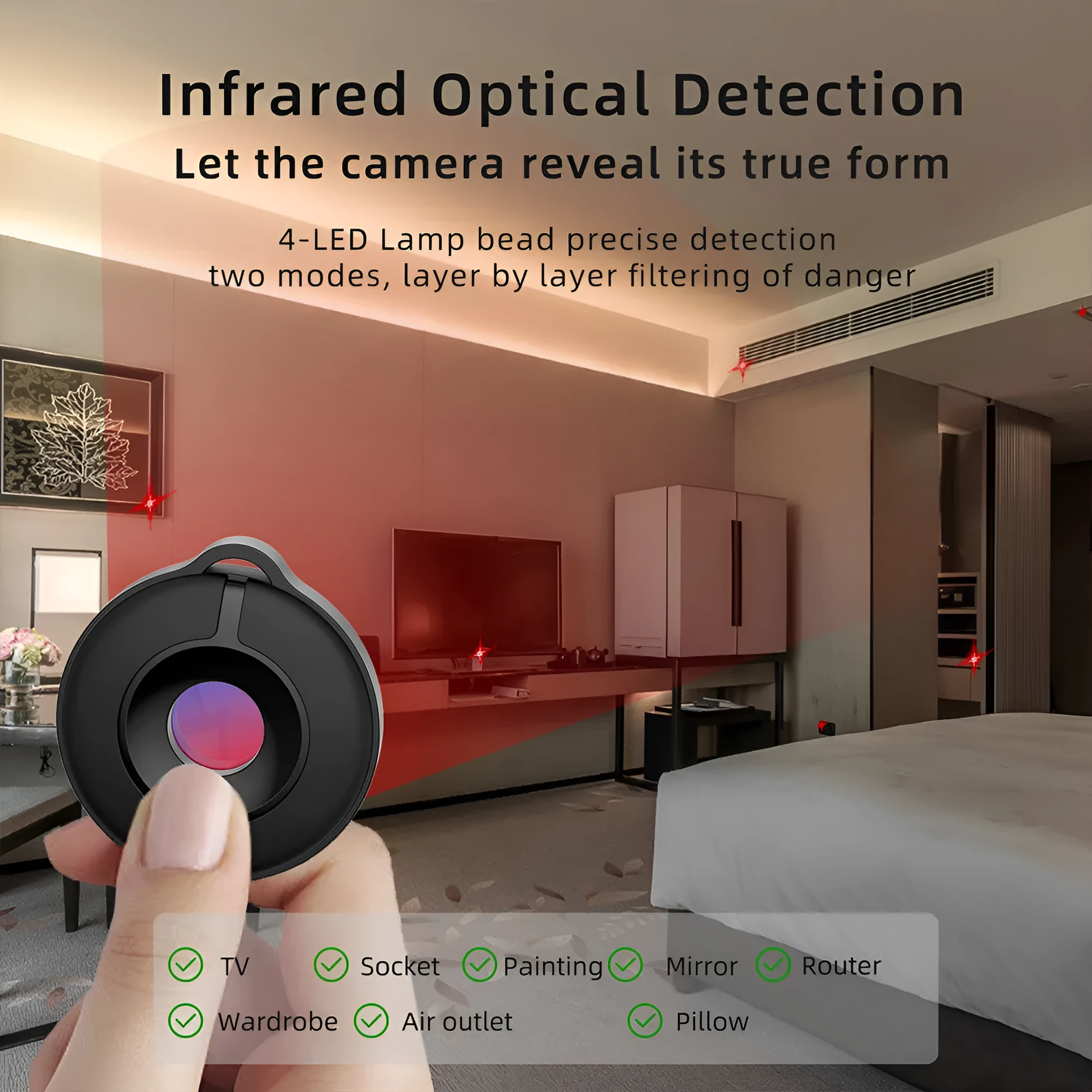
For professionals such as security consultants, private investigators, or corporate security teams, this device offers a tool for sweeping meeting rooms, hotel conference spaces, or temporary offices for unauthorised recording devices. Its 5-metre detection range allows for scanning a standard room from a central position, while the infrared function ensures cameras hidden in dark corners, behind objects, or within smoke detectors can be identified. The remote inspection capability means the user does not need to touch or disturb potential hiding spots prematurely.
Everyday Home Use
For personal use, the detector is suitable for checking holiday rentals, changing rooms, or one's own home after a service visit. The recommendation to use it in weaker light conditions aligns with common hiding places for cameras, which often have limited ambient light. Its easy operation via a single long-press button makes it accessible for users with no prior experience in counter-surveillance, providing immediate peace of mind regarding personal privacy.
Benefits and Buying Value
The value of this product lies in its specific functionality, ease of use, and the practical security it provides.
Reuse and Low Maintenance
The detector is a reusable electronic device with no mentioned consumables or ongoing costs. Its low maintenance is implied by its simple operational design—power on, scan, power off. There are no complex calibration steps or software updates described, suggesting it is ready to use straight from the package. The device offers repeated use across different locations and scenarios, making it a one-time purchase for ongoing privacy checks.
Why Choose This Product
This camera detector is chosen for its concrete 5-metre infrared detection range, a measurable specification that defines its coverage area. Unlike generic claims about security, it provides a specific method (infrared optical scanning) for a specific problem (finding hidden camera lenses). Its value is in filling a clear gap: visually inspecting an area is often inadequate, whereas this tool uses technology to reveal what the eye cannot see, particularly in dark conditions. It provides a focused solution without unnecessary additional features.