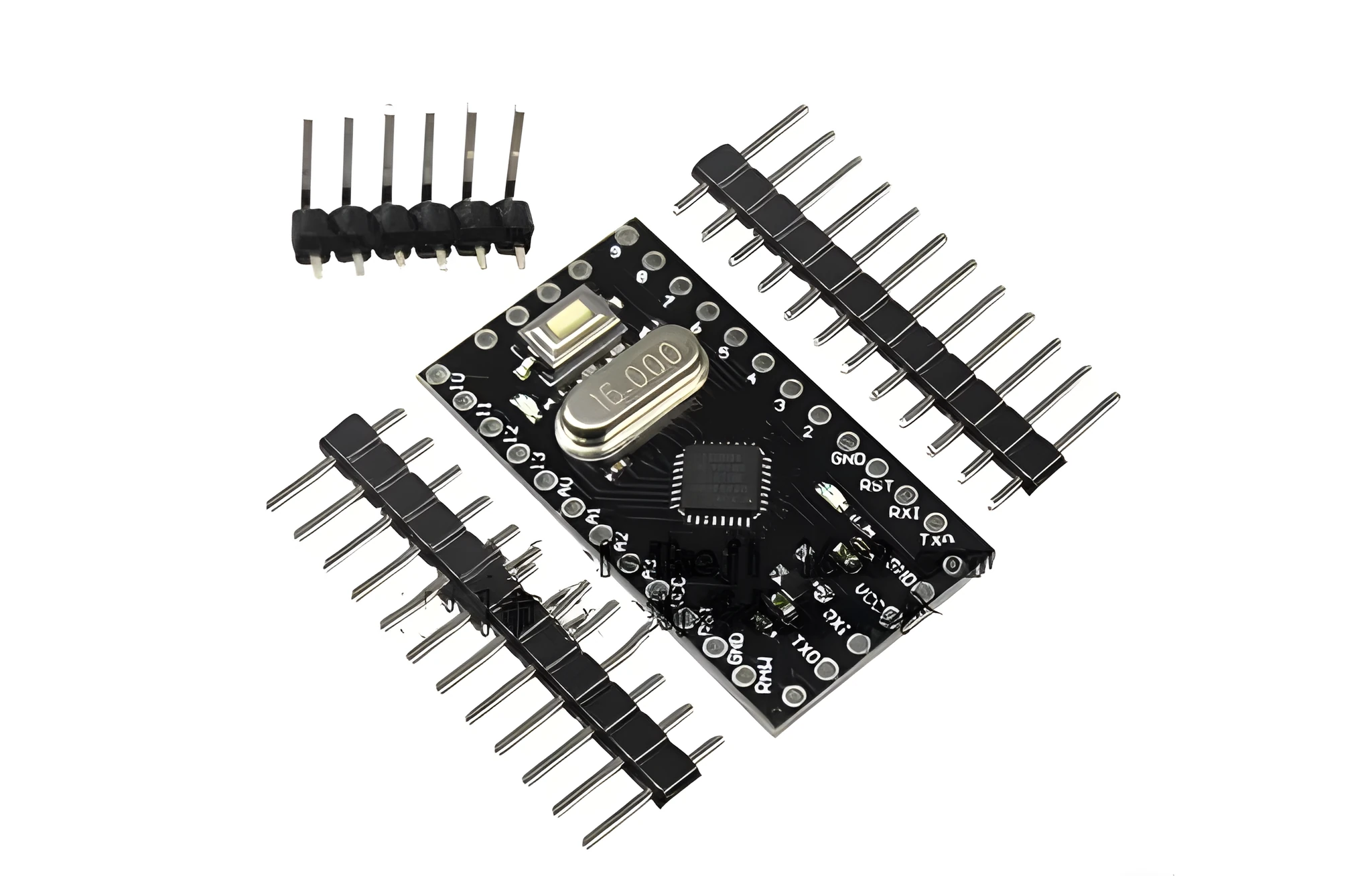
Arduino-compatible ATMEGA328P microcontroller circuit board with 14 digital I/O pins, 8 analog inputs, and 16MHz clock frequency for DIY electronics projects and prototyping.


Arduino-compatible ATMEGA328P microcontroller circuit board with 14 digital I/O pins, 8 analog inputs, and 16MHz clock frequency for DIY electronics projects and prototyping.
ATMEGA328P Microcontroller Board: A Compact Core for DIY Electronics Projects
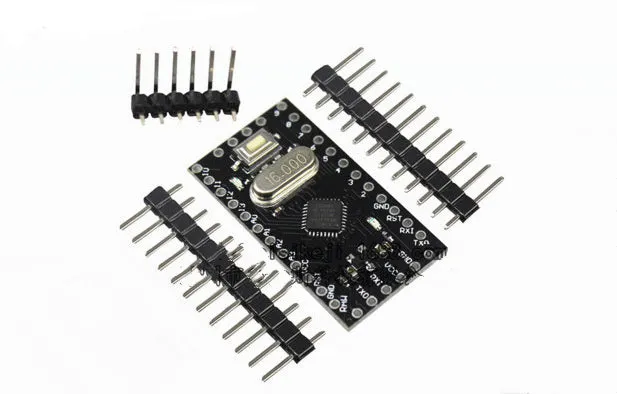
This Arduino-compatible Mini Pro microcontroller board provides a versatile and accessible foundation for prototyping and building electronic projects. Based on the widely-used Atmel ATmega328P-AU processor, it offers a familiar development environment alongside a practical set of I/O options. Its small 33.3mm by 18.0mm footprint makes it suitable for projects where space is limited, while the inclusion of a 16MHz clock, reset button, and pre-soldered pin headers helps streamline the building process for hobbyists and students.
Features and Construction

This board is designed as a functional core component for electronic circuits, focusing on providing the essential connections and processing power in a minimal form factor.
Material and Build
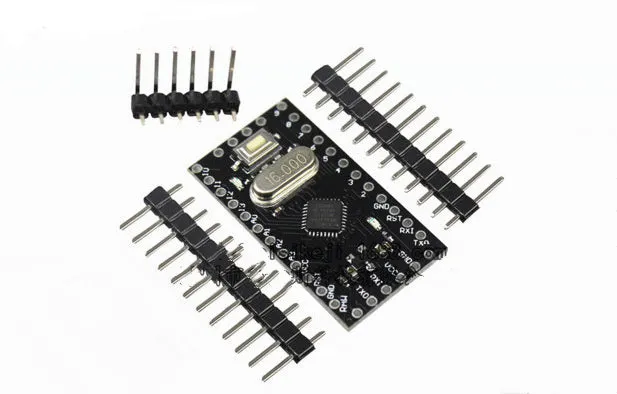
The board is constructed from standard fibreglass PCB material with a solder mask. Key components include the surface-mounted Atmel ATmega328P-AU microcontroller, which handles all processing tasks, and a 16MHz quartz crystal resonator that provides the system clock. Pin headers are pre-soldered to the board, allowing for easy connection to a breadboard or direct wiring without requiring additional soldering from the user.
Size and Practical Fit
With dimensions of 33.3mm in length and 18.0mm in width, this board is notably compact. This small size allows it to be integrated into final project enclosures or used in prototypes where board real estate is at a premium. The layout positions the digital and analog pins along the edges for straightforward cable routing.
Uses and Placement

Due to its I/O configuration and processing capabilities, this board is suited for a range of applications, from educational demonstrations to functional prototypes.
Event or Professional Use
In a workshop or educational setting, this board can serve as a practical teaching tool for demonstrating microcontroller fundamentals, digital I/O, analog-to-digital conversion, and PWM signal generation. Its compatibility with the Arduino ecosystem means existing code examples and libraries can often be adapted, speeding up the development process for prototypes in product design or engineering testing.
Everyday Home Use
For the home hobbyist, this board is a candidate for building custom automation controllers, such as simple lighting systems, basic robotics, or environmental monitors. The availability of 8 analog inputs makes it suitable for projects involving multiple sensors, like temperature, light, or potentiometers, while the 6 PWM-capable digital outputs allow for dimming LEDs or controlling motor speed.
Benefits and Buying Value
The value of this product lies in its role as a dedicated, component-level controller, offering specific advantages for certain types of projects.
Reuse and Low Maintenance
As a standalone microcontroller board without integrated USB or other peripherals, it can be deployed as a permanent control unit within a finished project. Its support for a wide input voltage range (3.3V to 12V DC) and 9V battery power offers flexibility in final power supply design. Once programmed, it requires minimal ongoing maintenance.
Why Choose This Product
This board is a practical choice when your project requires the processing power and I/O count of an ATmega328P but in a smaller, more integrated form factor than a standard Arduino Uno. It eliminates the bulk of connectors you may not need, providing just the core microcontroller and its essential support circuitry. It is specifically useful for projects where the board will be permanently installed and where every millimetre of space counts.